Freshly approved, you open the Amazon Flex app at lunch, tap Available Blocks, and stare at an empty screen. Starting Amazon Flex is the easy half, and booking delivery blocks is where people stall.
Each block runs about 2 to 4 hours, and Amazon decides when blocks exist and how many appear. Your "own schedule" means picking from whatever got released that hour.
This guide is for people holding a weekday job who want evening and weekend Flex income, since those are the exact hours when delivery demand peaks hardest.
How Do You Start Amazon Flex in 2026?
Starting Amazon Flex takes four moves: meet the eligibility rules, apply through the official app, pass a background check, and finish a short orientation inside the app.
Amazon Flex applicants must be at least 21 years old, hold a valid driver's license for their state, and pass a background check covering driving and criminal records.
Who Qualifies for Amazon Flex?
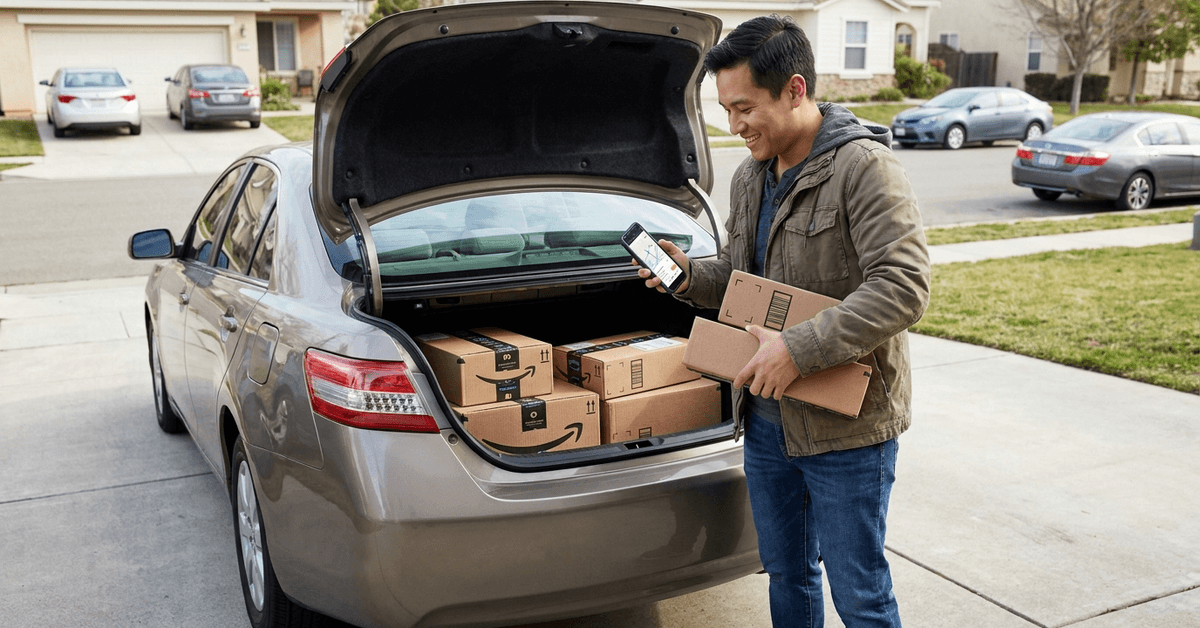
No commercial driver's license is needed. Most drivers use a midsize sedan, SUV, or van, while motorcycles and oversized trucks typically get turned away for package work.
Vehicle rules change by city, so check your region's list on the official Amazon Flex site first. A reasonably modern Android or iPhone that runs the Flex app smoothly is also required.
How Long Does Amazon Flex Approval Take?
Signing up happens inside the app: pick your region, enter personal details, then upload your driver's license, proof of insurance, and Social Security Number if you're in the U.S.
Background check results arrive anywhere from a few days to several weeks, and some cities run a waiting list when driver demand is low. I'd treat that wait as prep time for insurance calls and a mileage log, two chores covered further down.
How Do Amazon Flex Delivery Blocks Work?
A delivery block is a fixed time slot, often 2 to 4 hours, during which you deliver packages assigned by Amazon, with the pay shown before you accept. There are no traditional shifts and no manager handing out hours.
Once activated, new drivers open the Available Blocks section and claim whatever fits. I like the block system for one reason: the Amazon Flex app lists the pay for every slot before you commit to anything.
Why Do Amazon Flex Blocks Disappear So Fast?
Blocks appear based on regional demand, and fresh ones can pop up at random points in the day. Peak demand lands on evenings and weekends, then climbs again around big shopping holidays.
Evening and weekend drivers face a funny math problem. The hours with the most blocks are also the hours when every other part-timer with a 9-to-5 is tapping the same screen.
Should You Refresh the Amazon Flex App All Day to Get Blocks?
Not if you hold a day job. Refreshing nonstop is the standard advice for landing Amazon Flex blocks, and I'd skip it if you can only drive evening and weekend blocks.
Amazon releases new Flex blocks in waves several times per day, and the timing isn't fully predictable. Refreshing at your desk every few minutes trades focus at your real job for a lottery ticket.
So what works instead? Notification alerts plus a fixed checking routine catch plenty of those waves without turning your phone into a slot machine.
A Block-Checking Routine That Fits Around a Day Job
This routine leans on in-app alerts and the demand patterns that show up most often across a normal week:
- Turn on block notifications in the Flex app so new releases reach you without manual refreshing.
- Check at set times, like a quick morning look and a lunch-break look, instead of all afternoon.
- Target evening and weekend blocks, when demand peaks and more slots tend to appear.
- Watch shopping holiday weeks closely, since demand jumps and extra blocks often show up.
Are Amazon Flex Instant Offers Worth Taking?
Instant offers are short-notice deliveries that can pay more than a standard block. Accepting them is optional, and they suit experienced drivers who already know the pickup and delivery flow.
A short-notice offer only helps if you're free the moment it appears. For a day-job driver, treat instant offers as occasional bonus money and keep your plan built on scheduled blocks.
How Much Does an Amazon Flex Block Pay, and When Do You Get Paid?
Amazon Flex shows the expected pay for every block before you accept it, based on block length and local rates. Amazon Flex pays drivers by direct deposit, typically twice a week.
Some block types, like Amazon Fresh grocery runs, can include customer tips on top of base pay. Payment amounts and dates show up in the app's earnings dashboard.
| Block type | Pay shown upfront? | Tips possible? | Best fit |
|---|---|---|---|
| Standard package block | Yes, base pay listed | Usually no | New drivers building a routine |
| Amazon Fresh block | Yes, base pay listed | Yes, customer tips | Drivers comfortable with grocery handoffs |
| Instant offer | Yes, when the offer appears | Depends on delivery type | Experienced drivers free on short notice |
Tip-eligible Fresh blocks are the one place where the upfront number can grow after you finish delivering.
Why the Block Pay Figure Is Gross Pay
The pay on the block screen is what Amazon sends you, before fuel and taxes come out. As an independent contractor, nobody withholds tax from it for you.
I'd divide every block's pay by the full time it eats, including the drive to pickup and home again, because a 2 hour block with a long commute shrinks fast.
Do You Need Special Insurance or Tax Prep for Amazon Flex?
Yes. Amazon Flex drivers are independent contractors who must carry personal auto insurance meeting local minimums and pay tax on their delivery income.
Neither of these shows up in the app's sign-up checklist as a warning, so they tend to surprise new drivers months later at claim time or tax time.
Does Personal Car Insurance Cover Amazon Flex?
Drivers must keep personal auto insurance that meets local minimums, and some regions mandate specific commercial coverage for delivery driving. Rules differ by location, so a phone call to your insurer beats guessing.
Ask your insurer these questions before your first block, and get the answers in writing if you can:
- Does my policy cover me while I deliver packages for pay?
- Does my state or region require commercial coverage for delivery work?
- Would a claim filed during a Flex block be denied under my current plan?
What Tax Form Does Amazon Flex Send?
Amazon Flex income is taxable, and drivers usually receive a 1099 form each year showing total earnings. The IRS self-employed tax center explains how contractor income and deductions work.
Log business mileage and expenses from your very first block. Rebuilding a whole year of trips from memory in April is nobody's idea of a fun weekend.
Questions People Ask About Amazon Flex Delivery Blocks
These are the questions that tend to come up right after sign-up, when the app is installed but the first block still feels far away.
- Q: Can I apply for Amazon Flex if my city has no openings?
Some areas run a waiting list when driver demand is low, so signing up still puts you in line. Keep your documents ready so approval moves fast once your region opens. - Q: Do I need a commercial driver's license for Amazon Flex?
No. A standard valid driver's license for your state or region works, as long as you're 21 or older and pass the background check. - Q: Can I use a motorcycle for Amazon Flex?
Motorcycles typically aren't permitted, and neither are large trucks or oversized vehicles. Midsize sedans, SUVs, and vans are the usual picks, though city rules vary. - Q: How long is an Amazon Flex block?
Blocks often run 2 to 4 hours, and the pay for that window appears in the app before you commit. Pick lengths you can finish comfortably around your other obligations. - Q: Where can I check current Amazon Flex rules?
The Amazon Flex FAQ and official help desk carry the latest details on eligibility and pay policies. Driver forums help with habits, but treat their rules talk as secondhand.
Conclusion
Amazon Flex gets easier once you stop chasing every refresh and start checking at times you control. Get approved, set notification alerts, and aim for the evening and weekend blocks where demand runs highest.
Sort out insurance and a mileage log during the approval wait, because those chores only get harder later. Open the app tonight, turn on alerts, and see which release wave in your area shows up first.