You can get a free phone with SNAP benefits through the federal Lifeline program. One rule shapes the whole decision, though: only one Lifeline benefit is allowed per household.
Household here means people who share income and expenses, not everyone sleeping under one roof. Three adults splitting rent and groceries share one Lifeline line between them.
This guide is for SNAP households in 2026 that need one dependable number for job calls and clinic reminders, and want to pick the right carrier on the first try.
Can You Get a Free Phone If You're on SNAP?
Yes. SNAP enrollment is one of the qualifying programs for Lifeline, a federal benefit that provides free or discounted phone service through approved carriers.
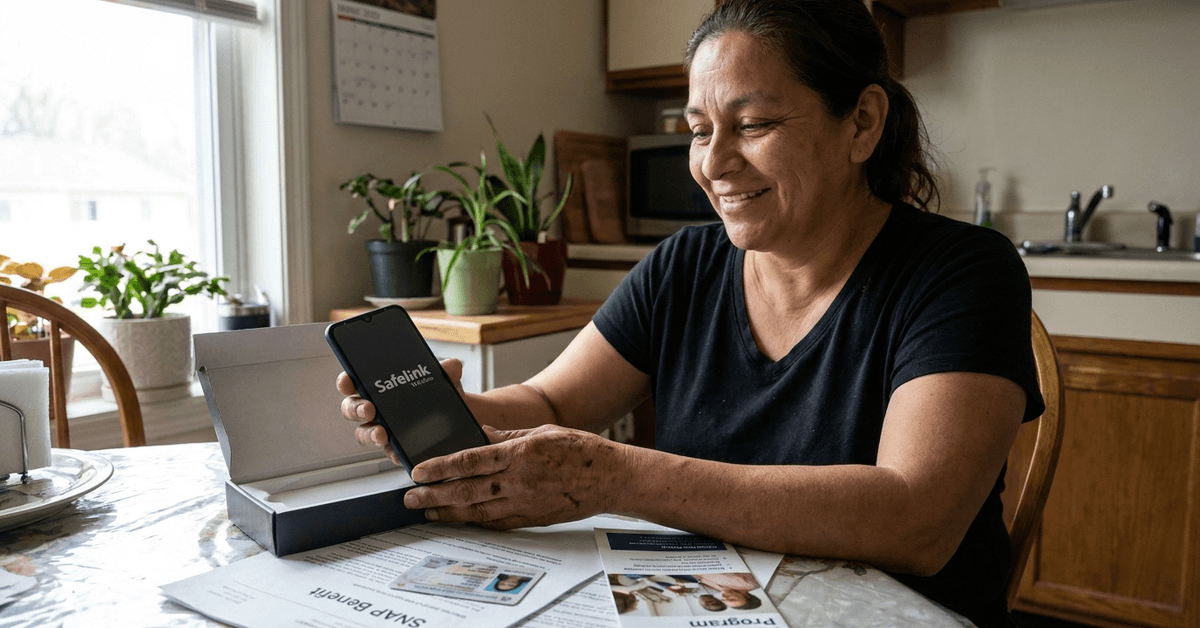
Lifeline covers the service itself, and many participating carriers add a smartphone at no upfront cost. There's usually no contract, and the line stays active as long as you remain eligible and recertify each year.
Other Ways to Qualify for Lifeline Without SNAP
SNAP isn't the only door. Medicaid, Supplemental Security Income (SSI), Federal Public Housing Assistance, and certain tribal programs also qualify a household for the same benefit.
There's also an income route. Households earning at or below 135% of federal poverty guidelines can apply even without any government assistance. Keep this in mind, because it comes back later in the article.
What Does the Free Lifeline Phone Plan Include?
A typical Lifeline plan includes a smartphone (often Android), up to 1,000 voice minutes a month, text messaging, and a monthly data allotment that varies by provider.
Some carriers bundle extras such as international calling or hotspot use. The core package stays the same everywhere: a working phone, a number, and enough service to stay reachable.
Why the Data Allotment Matters More Than the Phone
I think the device gets far too much attention. Voice minutes top out around 1,000 a month across most plans, so the part that changes between carriers is the data amount.
Data is what lets you open a job application link, upload a document for your caseworker, or join a video appointment. Compare the monthly data figure before you look at the phone model.
Fees That Can Still Show Up
The main service is free for eligible households, but a few charges can appear. Upgrading to a better device or replacing a lost one may come with a small fee.
Premium data amounts and other features beyond the standard plan are optional paid add-ons. Lifeline doesn't cover them, so read the plan page before you tap "upgrade."
How to Apply for a Free Phone With Your SNAP Benefits
Most people finish a Lifeline application in under 30 minutes once their paperwork is ready. You can apply online, by mail, or at a walk-in registration event, depending on the carrier.
Documents to Have Ready
Gather these first and the application moves much faster:
- Proof of SNAP participation, such as an award letter, benefits card, or official correspondence
- Government-issued photo ID
- Proof of address, like a utility bill or lease agreement
Snap clear photos of each on your current phone so uploading takes seconds. A blurry award letter is the fastest way to get asked for extra documents.
The Application Steps, in Order
The process follows the same basic path with every approved carrier:
- Pick a carrier that serves your ZIP code from the official Lifeline list
- Submit your details and upload your documents online, by mail, or in person
- Wait for verification, where the carrier checks your info against government databases
- Receive your phone by shipping or local pickup once approved
You can confirm eligibility rules and find carriers for your state on the official Lifeline Support website. Community centers in some areas also partner with Lifeline to help people fill out the forms.
How Long Approval and Delivery Take
Most applicants get a decision within a few business days. Once approved, carriers usually ship or set up the phone within one to two weeks.
In-person events can sometimes hand out a phone the same day. That depends on how much inventory the carrier brought, so arriving early helps.
Which Lifeline Carrier Should You Choose in 2026?
The best Lifeline carrier is the one with strong coverage at your home address and your workplace, since you only get one benefit per household and service quality differs by area.
The usual tip is to grab whichever carrier hands out the nicest free smartphone. I'd skip that logic entirely, because Lifeline gives your household one line, and a shiny phone with no signal in your kitchen is a paperweight with a charger.
Lifeline Providers You'll See Most Often
Carriers that commonly participate in Lifeline include:
- Assurance Wireless
- SafeLink Wireless
- Q Link Wireless
- enTouch Wireless
- Access Wireless
Availability changes by ZIP code, so treat this as a starting point. Some lean on nationwide network coverage, while others push larger data allotments.
How to Compare Carriers Without Guessing
Open each carrier's coverage map and type in the exact addresses where you spend your days. Rural coverage quality differs a lot between providers, and the map is the only fast way to see it.
Then check online reviews or ask neighbors who already use Lifeline. Customer service speed and device reliability rarely show up on a plan page, and those details matter when something breaks.
Who Should Hold the Household's Lifeline Line?
The household's single Lifeline benefit should sit on the phone of whoever receives the most important calls, usually the person job hunting or managing medical appointments.
Families often register the line to whoever filled out the form first. A better question: whose missed call costs the household the most money? Put the free line in that person's pocket.
Avoiding Duplicate Applications
Two people in the same household applying with different carriers is a common mistake. Since carriers check government databases, duplicates usually get flagged, and one or both applications can stall.
Agree as a household on one applicant and one carrier before anyone signs up. Five minutes of conversation saves weeks of back-and-forth.
How to Keep Your Free Phone After You Get It
Lifeline requires annual recertification, and missing it can suspend your service.
If you're still on SNAP, renewing is usually simple. Put your Lifeline recertification reminder right next to your SNAP renewal date, so both sets of paperwork stay together.
What Happens If You Leave SNAP?
Leaving SNAP or similar programs can end your Lifeline eligibility. Carriers typically send notice before cutting service, and rules for device returns differ between providers.
Here's the move I'd make: check the 135% income route before assuming the phone is gone. A household that earns too much for SNAP can still sit under the Lifeline income limit.
Privacy and Your SNAP Information
Lifeline is federally regulated, and carriers must follow privacy and fraud protection standards. Your SNAP information is shared only to verify eligibility.
The FCC's Lifeline consumer page explains your rights if a carrier mishandles your application or data.
Questions People Ask About Free Phones With SNAP
These come up again and again from SNAP households weighing whether Lifeline is worth the paperwork.
- Q: Can I get a free phone with SNAP if I already have a phone?
Yes. Many carriers let you bring your own compatible device and apply the Lifeline benefit to it. That can be a smart pick if your current phone is better than the free model. - Q: Can I switch Lifeline carriers if coverage is bad?
Generally, yes. You can move your benefit to another approved carrier serving your area, though you may need to go through their enrollment steps again. Check the new carrier's coverage map first so you only switch once. - Q: Do I need a bank account or credit check to get a Lifeline phone?
No credit check is part of Lifeline eligibility. Approval depends on program participation or income, plus your ID and proof of address. - Q: What if my address is a shelter or I don't have a permanent address?
Contact the carrier or a partnering community center and ask how they handle temporary or shared addresses. Bring any official mail you receive, since it often works as proof of where you're staying. - Q: Can I keep my old phone number?
Many carriers allow number transfers during setup. Have your current carrier account number and PIN ready before you apply.
Conclusion
A free phone with SNAP benefits works best when you choose the carrier by coverage first. One Lifeline line per household means deciding together who holds it before anyone fills out forms.
Keep your SNAP award letter, ID, and address proof handy for annual recertification each year. Check the official Lifeline site for your state today, and your next important call might come faster.