Getting a Rakuten credit card in Japan as a foreign resident mostly comes down to one quiet test: whether your personal details match, letter for letter, across every document Rakuten checks.
Rakuten's screening compares your application against your resident card, your bank account, and your registered address. One inconsistent name spelling can trigger a rejection, even when your income and visa look fine.
This guide is for newer residents in Japan, students and salaried workers alike, who hold a residence card, have little or no local credit history, and want their first Japanese card approved.
Can a Foreigner Get a Rakuten Card in Japan?
Yes. Foreign residents can apply for a Rakuten Card if they are at least 18 years old, hold a valid residence status, and have a Japanese address. Tourists on short visits generally fall outside the requirements.
The standard Rakuten Card has no annual fee, which makes it a low-cost first card for anyone building a financial footprint in Japan. Approval is never automatic, but steady income or a stable student status both help your case.
Do You Need to Speak Japanese to Apply?
No, but expect friction. The application form and customer service run mainly in Japanese, so a translation tool like Google Translate will do a lot of the heavy lifting for you.
I'd budget extra time for this part. The Rakuten form asks for your resident card number, address, and employment details, and a mistranslated field there causes more trouble than a slow application ever will.
What Documents Do You Need for the Rakuten Card Application?
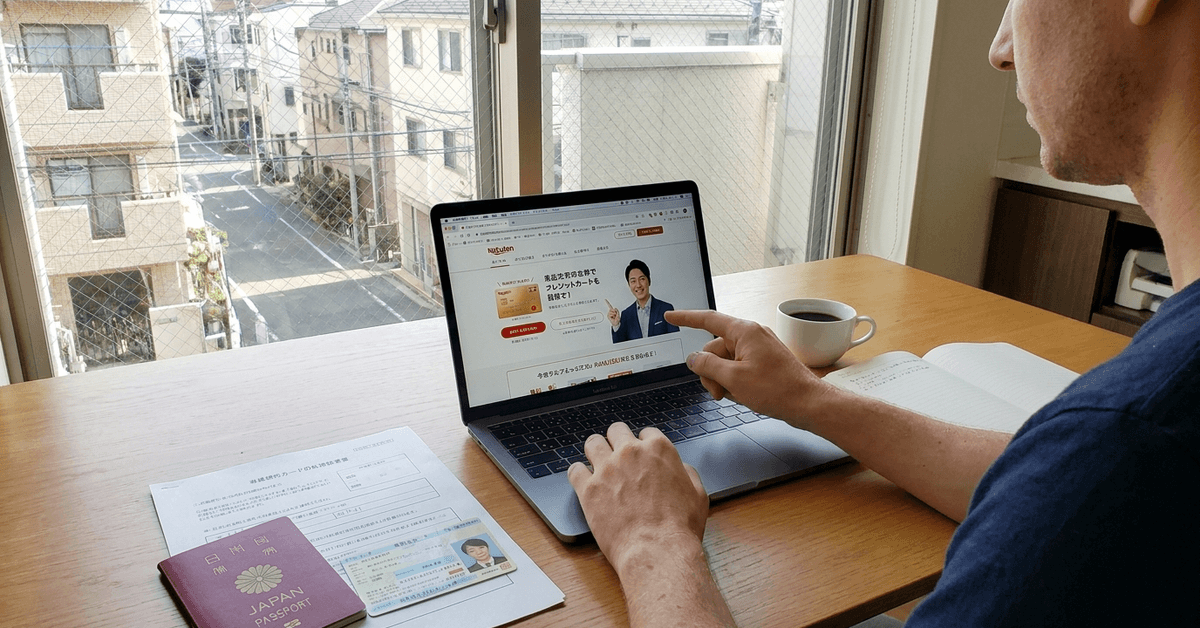
You need your residence card, your Japanese address details, proof of income such as pay stubs, and usually a Japanese bank account for payments. A Japan-registered phone number is sometimes required too.
Gather these first, then compare them side by side. If you moved recently or changed jobs, update your records with your ward office and bank before you open the form.
The Name-Matching Trap for Expats
Rakuten checks for matching information during screening, and foreign names are where mismatches hide. Your bank might list your name in katakana while your residence card shows it in romaji, or one document drops your middle name.
My take: this matching check is the single most underrated part of the process, because Rakuten treats address errors and inconsistent name spelling as typical reasons for application trouble.
Fix the spelling before applying, and you remove the easiest reason to reject you.
How to Apply for Rakuten Card Online, Step by Step
You apply online through the official Rakuten Card website, and the whole form takes one sitting if your documents are ready. The Rakuten Card application is an online form reviewed by an automated screening system.
The process follows this order:
- Enter your personal details, contact information, and residence card number
- Add employment status and income information
- Choose your card design and set a PIN
- Select single or revolving payment, then link your bank account
- Re-read every field and submit
Filling Out the Japanese-Only Form
Translate one field at a time instead of translating the whole page at once. Whole-page translation scrambles field labels, and you end up typing your postal code where the building name belongs.
Some questions feel repetitive. Answer them identically anyway, since Rakuten may reject incomplete or inconsistent forms without telling you which field caused it.
Single Payment or Revolving: Which Should You Pick?
Single payment means you clear your full balance each month. Revolving spreads payments out and adds interest, which can quietly snowball for someone still learning how Japanese billing cycles work.
I would pick single payment for a first card in Japan, since the Rakuten Card app shows your balance in real time and makes full monthly payoff easy to track.
How Long Does Rakuten Card Approval Take?
Rakuten typically responds to applications within a few business days, and approved cards arrive by mail within a week or two. Holidays and busy periods can stretch both timelines.
The stages break down like this:
| Stage | What Happens | Typical Timing |
|---|---|---|
| Screening | Automated review of your details | A few business days |
| Extra verification | Possible request for more ID by email or post | Varies |
| Card delivery | Card mailed to your registered address | One to two weeks |
| Rejection notice | Decision sent with little or no explanation | A few business days |
Most of your waiting happens after approval, so don't panic if the card itself takes a while.
What If Rakuten Says No?
Rejections in Japan rarely come with a detailed reason. That vagueness is normal across Japanese finance, so read it as "something didn't fit" instead of a judgment on you.
Wait about six months, strengthen your documentation, and apply again. Newer arrivals are often judged on income stability and address legitimacy, so a few more months of pay stubs at the same address can change the outcome.
Should You Cancel Old Cards Before Applying?
No, and this is where I part ways with the usual "clean up your wallet first" tip. Cancelling previous credit cards too recently can lower your approval odds with Rakuten, the same way applying for several cards at once can.
I think new residents should leave existing cards alone for at least six months around a Rakuten application, because both recent cancellations and stacked applications count against applicants with thin local credit.
Sudden account changes look like instability to an automated screener.
Mistakes That Quietly Lower Your Approval Odds
None of these guarantee rejection, but each one gives Rakuten's system a reason to hesitate:
- Address details that differ between your residence card and the form
- Name spelling that varies between your bank and your ID
- Bank or resident registration details left outdated after a move
- Rushing through the form to submit faster
- Applying for multiple credit cards in the same period
Accuracy beats speed every time here. Who knew a credit card application would reward the slowest typist in the room?
Using and Protecting Your Rakuten Card After Approval
You activate the card online or by phone using the instructions Rakuten sends with it. Rakuten Points then accrue automatically on qualifying purchases, and you can redeem them for shopping or bill payments.
Purchases at Rakuten Ichiba, the company's online mall, push the points value higher. The Rakuten Card app and member portal show your balance and points in real time.
What to Do If Your Card Is Lost or Stolen
Contact Rakuten Card customer support immediately. Save the support number in your phone the day your card arrives, since hunting for it in a panic, in a second language, is nobody's idea of fun.
Do Rakuten Points Count as Taxable Income?
Sometimes. Japanese tax law may require reporting large rewards income, though small amounts are often ignored. For broader rules on consumer protection and safe card usage, the Financial Services Agency publishes official guidance in English.
Questions People Ask About Rakuten Credit Cards in Japan
These come up again and again from new residents still sorting out their first Japanese card.
- Q: Can international students get a Rakuten Card in Japan?
Yes, students with a valid residence status and Japanese address may qualify. Steady part-time income helps, and a co-signer can strengthen a thin application. - Q: Does Rakuten check credit history from my home country?
The screening looks at credit history within Japan if any exists. Overseas records generally don't carry over, so newer arrivals get judged more on income and address stability. - Q: Do I need a Japanese phone number to apply for a Rakuten Card?
In some cases, yes. A domestic number also makes verification calls and follow-ups much smoother, so get one sorted before you apply. - Q: Is the Rakuten Card really free?
The standard card carries no annual fee. Revolving payments do add interest, so the card stays free only if you clear your balance monthly. - Q: How soon can I reapply after a Rakuten Card rejection?
Waiting about six months is a sensible gap. Use that time to fix mismatched details and build up proof of steady income.
Conclusion
A Rakuten Card application rewards preparation far more than speed, so check every document before opening the form. Matching your name and address across your residence card and bank account removes the most common rejection trigger.
Leave your existing cards untouched and avoid stacking applications in the months surrounding your Rakuten submission. Get those details lined up, and your first Japanese card may arrive sooner than you expect.