
A professional manicure qualification equips you with in-demand skills, global recognition, and a clear path to a sustainable income.
This full guide walks you through every stage, from researching accredited programs to preparing for advanced certification, so you can enroll with confidence and graduate ready to serve clients worldwide.
Certification Matters for a Worldwide Manicure Career
Solid certification instantly boosts credibility and widens job prospects across borders.
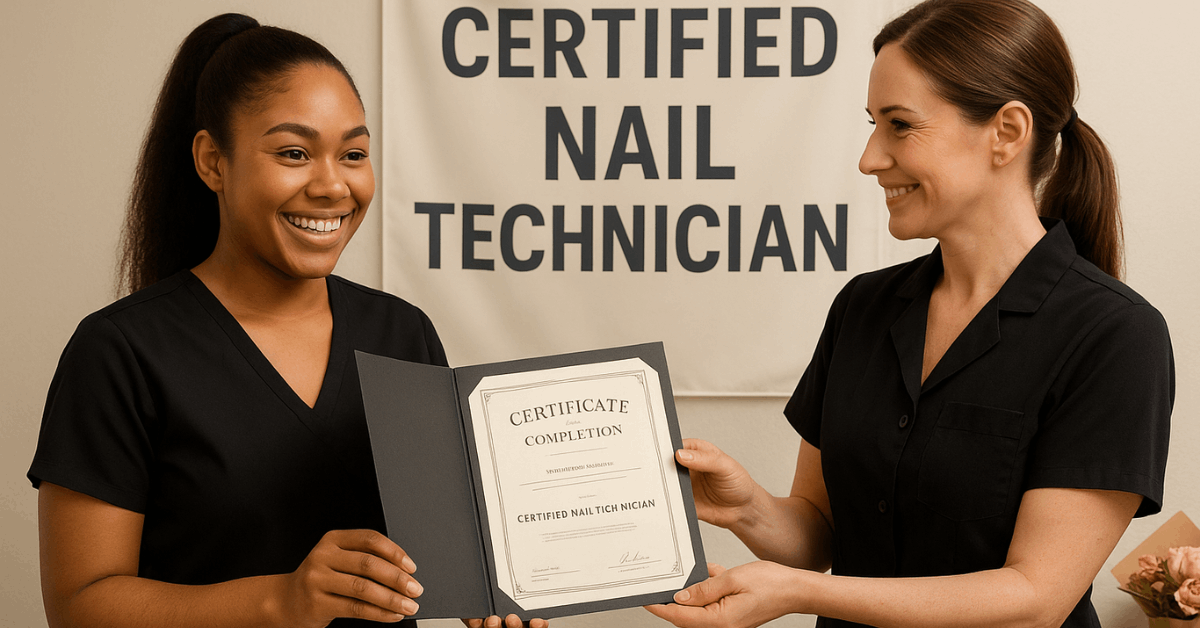
Once licensed, you can advertise proven expertise, command premium prices, and comply with safety regulations that protect every client you touch.
Key career gains you unlock after certification:
- Legal compliance in multiple regions – Meeting standardized training hours and hygiene rules helps you avoid fines or business shutdowns.
- Higher earning potential – Certified technicians routinely charge more because clients value documented skill.
- Stronger client trust and referrals – Licensing signals professionalism, leading to repeat bookings and word-of-mouth growth.
- Access to exclusive products – Many distributors sell professional-grade gels, e-files, and chemicals only to licensed practitioners.
- Pathway to ongoing education – Certifications often include or require continuing classes, keeping your techniques current.
Accreditation and Legal Requirements
Choosing an accredited program safeguards your investment and sets you up for any required state or regional licensure worldwide.
Accredited schools follow standardized curricula, maintain qualified instructors, and log verified practical hours, documentation licensing boards request during the application process.
| What Accreditation Confirms | Why It Protects You |
| Curriculum meets government standards | Hours count toward official license applications |
| Instructors possess verified field experience | Training reflects real-world salon practices |
| Facilities pass hygiene and safety audits | You learn correct sterilization from day one |
| Records are stored and verifiable | Future employers can confirm your education |
Insist on written evidence of accreditation or direct confirmation from the relevant licensing board before paying any tuition.
Course Structure and Core Curriculum
Knowing the curriculum upfront allows you to gauge training depth and workplace readiness.
Quality programs blend theory with hands-on modules so every topic translates into reliable client service.
Typical core topics and skills:
- Manicure and pedicure fundamentals – Nail shaping, cuticle work, massage, and polish application.
- Nail enhancements – Acrylic overlays, builder gel, dip powder, and safe removal techniques.
- Nail anatomy and health – Recognizing disorders, contraindications, and referral situations.
- Sanitation and hygiene protocols – Tool sterilization, workstation disinfection, and cross-contamination prevention.
- Product chemistry – Understanding primers, monomers, and curing processes to avoid service breakdowns.
- Client communication – Consultation, aftercare advice, and recordkeeping that supports repeat business.
Expect a balance of classroom instruction, live demonstrations, and hundreds of supervised practice hours.
Hands-On Training and Practical Hours
Practical hours build dexterity, speed, and confidence before you accept paying clients.
Programs usually provide mannequin exercises first, then supervised services for real clients in a teaching salon.
What strong practical training looks like:
- Weekly rotating stations covering natural nails, enhancements, and art.
- Immediate instructor feedback to correct posture, filing angle, or product ratio.
- Logged service counts that match local licensing requirements.
- Opportunities to handle varied nail types, ages, and conditions.
- Confirm the minimum practical hours promised in writing, and verify that they exceed the license threshold in your intended work region.
Tools and Materials to Prepare
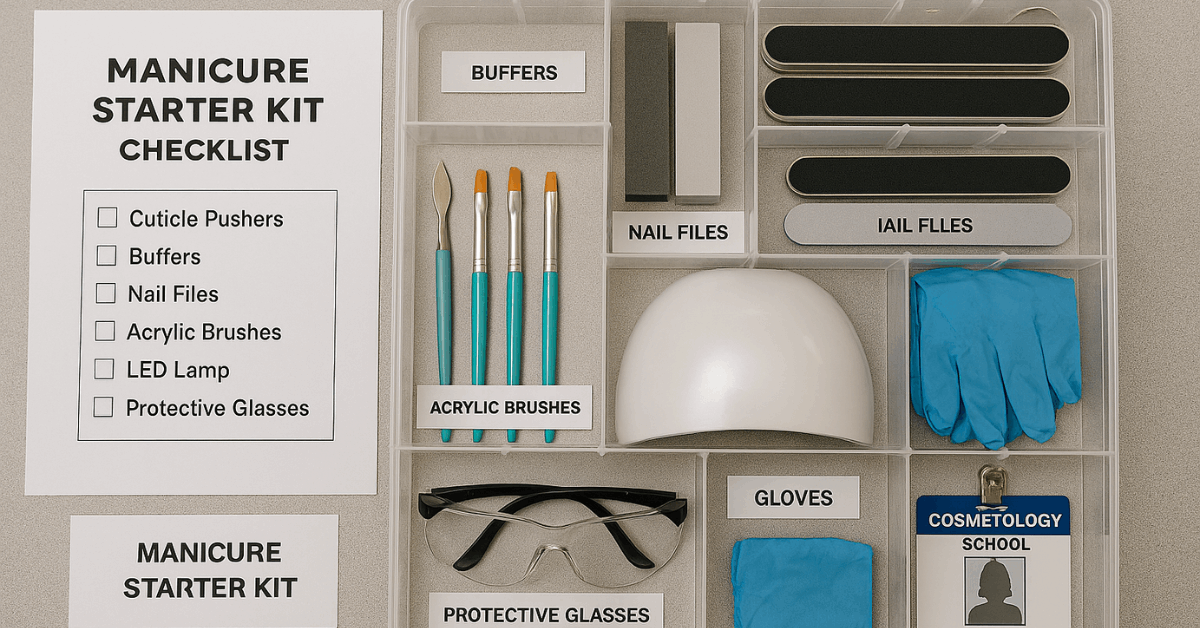
Having the correct kit on day one saves downtime and supports hygienic practice throughout your course.
Many schools sell starter packs, while others supply communal tools for class use.
Essential items most programs require:
- Professional nail files and buffers with grit variations for shaping and finishing.
- Cuticle pushers and nippers made from surgical-grade stainless steel.
- Reusable metal implements plus a personal sealed container for sanitation.
- LED or UV lamp if gel systems feature heavily in the curriculum.
- Sable brush sets for acrylic application and fine art detailing.
- Personal protective equipment such as nitrile gloves, masks, and protective glasses.
Ask for the full supply list during enrollment so you can source high-quality items within your budget.
Enrollment Process Step-by-Step
Following a structured enrollment process keeps paperwork smooth and start dates secure.
Although details differ by provider, most schools worldwide follow a similar flow.
- Submit an application form along with identification and academic records if required.
- Attend an information session or virtual orientation covering policies, schedules, and tuition plans.
- Secure funding through upfront payment, installment arrangements, or local grants.
- Sign an enrollment agreement outlining attendance policies, refund terms, and graduation criteria.
- Purchase or collect your kit before the first practical session begins.
Store digital copies of every signed document for future license verification.
Course Formats and Duration
Flexible schedules allow you to balance training with personal and professional commitments.
Programs worldwide generally offer three pacing options:
| Format | Typical Weekly Hours | Estimated Completion |
| Full-Time Day | 30–35 classroom and salon hours | 10–12 weeks |
| Part-Time Evening | 15–20 hours on weeknights | 20–28 weeks |
| Hybrid / Blended | Online theory + weekend practical | Varies by provider |
Verify that blended formats still satisfy local in-person hour requirements for licensure.
Evaluating Instructors and School Reputation
Experienced teachers accelerate skill growth and share vital salon insights.
When researching programs, look beyond glossy brochures to the people delivering the curriculum.
Factors that signal strong instruction:
- Documented salon or competition experience of five years or more.
- Active professional licenses and industry certifications.
- Small class sizes allowing individualized feedback.
- Up-to-date product knowledge and trend awareness.
- Positive graduate reviews highlighting teaching style and mentorship.
- Schedule a campus visit or video call, and ask to observe a live class if possible.
Career Paths and Income Potential
Certification opens doors to multiple revenue streams worldwide, far beyond traditional salon employment.
Diversifying your services and work settings can raise income and professional satisfaction.
Possible career directions after graduation:
- Luxury spa nail specialist offering bespoke enhancements and add-on treatments.
- Mobile technician bringing services to weddings, corporate events, or homebound clients.
- Editorial nail artist collaborating with stylists on photo shoots and runway shows.
- Product educator or brand ambassador teaching other professionals and influencing product development.
- Salon owner or manager overseeing staff, marketing, and business growth.
Global salary surveys place experienced, niche technicians in the higher earning brackets, especially when advanced skills justify premium pricing.
Continuing Education and Advanced Programs
Ongoing education keeps your techniques fresh and competitive in a trend-driven market.
Advanced courses dive deeper into artistry, e-file mastery, sculptured gel, and salon business strategy.
Advantages of pursuing advanced certification:
- Ability to offer premium services such as 3D encapsulation or hard-gel extensions.
- Eligibility for higher insurance coverage and professional memberships.
- Greater confidence in troubleshooting product issues and nail damage.
- Networking with peers and mentors who share cutting-edge knowledge.
- Plan to allocate annual time and budget for continuing education so your skill set remains current and profitable.
Conclusion
Enrolling in a manicure course is an investment that delivers worldwide professional credibility, reliable income, and personal fulfillment.
By selecting an accredited school, committing to rigorous hands-on training, and preparing properly for enrollment, you position yourself to pass licensing exams and thrive in a competitive industry.
Keep learning, diversify your services, and maintain impeccable hygiene standards, your clients and career will reward every effort you make toward excellence.