Plenty of guides to factory and packing jobs in Japan still say hourly pay starts around 1,000 yen. As of October 2026, paying that rate breaks the law in every prefecture.
Japan raises its minimum wage every autumn, one prefecture at a time. Pay figures copied from older job posts go stale fast, and some listings never get updated.
This guide is for people applying from outside Japan with beginner Japanese or none at all. It covers what the work pays right now and which visa route fits a factory offer.
How Do Foreigners Get Factory and Packing Jobs in Japan?
The usual order is job offer first, visa second. A Japanese employer or licensed agency hires you, then sponsors your residence status.
The Specified Skilled Worker (SSW) visa is the main route for foreign factory workers in Japan, and it usually requires Japanese at JLPT N4 level plus a formal job offer.
The Immigration Services Agency's SSW page lists the eligible industry fields and test details.
Your sponsor handles most of the visa paperwork. Your part is passing the language requirement and keeping your resume and contract details consistent.
The April 2027 Change Worth Planning Around
The Technical Intern Training Program is on its way out. Japan's Ministry of Health, Labour and Welfare says its replacement, the Employment for Skill Development (ESD) program, begins operating on April 1, 2027.
ESD makes Japanese study mandatory, with receiving companies paying for the courses. The Consumer Goods Forum's Japan team reports workers may request a same-field job transfer after one to two years.
I'd ask any agency pitching an intern-route offer this winter what happens to your status after April 1, 2027. A vague answer is your cue to keep looking.
What Do Factory Jobs in Japan Pay in 2026?
Factory and packing jobs in Japan usually pay at or slightly above the local minimum wage, with extra pay for overtime and night shifts. Location sets your floor.
Japan's Central Minimum Wages Council recommended a 55 yen rise for fiscal 2026, lifting the national average hourly minimum wage to about 1,176 yen.
Why a 1,000-Yen Job Ad Is a Red Flag Now
Tokyo's minimum climbed to 1,280 yen on October 1, 2026. The lowest new rate is Miyazaki's 1,085 yen, effective October 24, according to the Ministry of Health, Labour and Welfare's fiscal 2026 table.
So a listing still advertising 1,000 yen an hour is either years out of date or offering an illegal wage. Neither option says good things about the employer or agency behind it.
I'd treat the 1,085-yen floor as a free legitimacy test once every prefecture's new rate kicks in by early December. Any offer below it gets skipped.
Is Tokyo Worth Chasing for the Higher Rate?
City jobs pay more per hour, so the usual tip is to aim for Tokyo or Osaka. So which matters more, the city or the overtime?
I'd rank guaranteed overtime above location. Fukuoka's 1,114-yen minimum turns into roughly 1,393 yen per overtime hour at the 25% premium, already above Tokyo's 1,280-yen base.
Run 160 regular hours plus 20 overtime hours a month, and the Fukuoka job edges past a Tokyo job with zero overtime. Rent hasn't even entered the math yet.
Which Factory and Packing Jobs Suit Beginners?
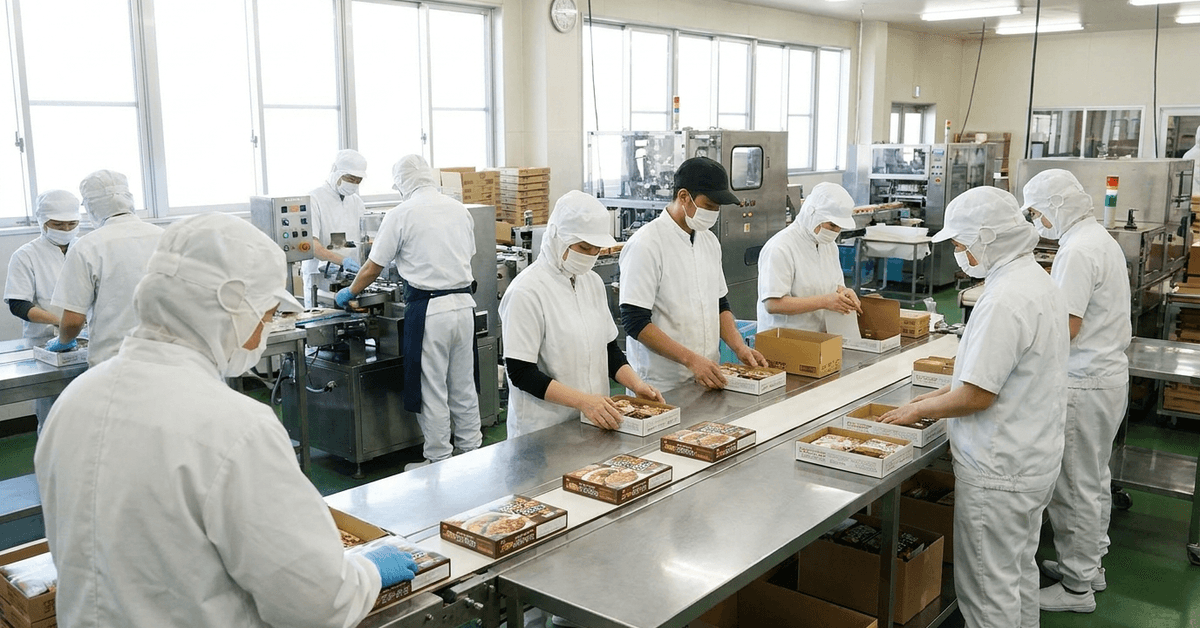
The four common factory paths in Japan differ mostly in physical load and how strict the rules get. Food processing jobs in Japan involve sorting and labeling products under strict hygiene rules, and positions can be full-time or seasonal.
| Role type | Daily work | Physical load | Watch for |
|---|---|---|---|
| Electronics assembly | Assembling, testing, packing gadgets | Light to moderate | Long shifts, close detail checks |
| Food processing | Sorting, packing, labeling | Moderate | Hygiene rules, seasonal contracts |
| Automotive parts | Tool operation, heavier lifting | High | Strain from repeated lifting |
| Packing and logistics | Warehousing, shipment prep | Depends on item size | Repetitive tasks |
Match the physical load column to your body first, since no training program changes how much you can lift.
Where Automotive and Packing Work Fit
Automotive parts plants ask more of your back, yet many offer structured on-the-job training and a clearer promotion path for steady staff.
Packing and logistics roles skip production entirely. The work is repetitive enough that you may start dreaming in cardboard, and larger shipments make it physically demanding.
How to Apply for a Factory Job in Japan From Overseas
Applying from overseas follows five steps: find a listing open to non-residents, send a Japanese-style resume, pass a video interview, clear any health or language checks, then review the contract.
Hello Work is Japan's government-run network of public employment offices, and it lists factory openings alongside private job portals.
Job Boards That List Factory Work
These platforms carry manufacturing and packing listings, though not every ad accepts applicants living outside Japan:
- GaijinPot Jobs and Jobs in Japan: English-friendly boards aimed at foreign job seekers
- Nippon Shigoto and MyNavi: broader portals with manufacturing listings
- Hello Work: the government job service, searchable online
- Global Support: an agency focused on SSW applicants
Look up reviews of any agency before sending passport scans or personal documents. Legitimate agencies can tell you their license status without hesitation.
Getting the Japanese-Style Resume Right
A Japanese resume, called a rirekisho, includes a passport-style photo and a short, dated employment history. Foreign applicants sometimes get leniency on format, but a tidy rirekisho shows you followed local norms.
A short cover note in Japanese shows initiative, even if it runs only a few lines. Show up on time for video interviews and health checks, because punctuality gets noticed.
What Should You Check in a Japanese Factory Contract?
Check the pay terms and every deduction in writing, and ask questions until each line makes sense. Japan's labor standards inspection offices, called Rōdōkijun Kantokusho, handle complaints about unpaid overtime and unclear contract terms.
Go through the contract with these questions open beside it:
- Is the hourly rate at or above the prefecture's current minimum wage?
- Does overtime pay at least 25% extra, and do night shifts add more?
- What gets deducted for the company dormitory, meals, or transport?
- Are health insurance and pension contributions listed? Both are often mandatory.
- When does the visa need renewing, and who files it?
- Is the attendance bonus written into the contract or only promised out loud?
When Overtime Goes Unpaid
Foreign workers in Japan have reported unpaid overtime and vague contract terms. The local labor standards inspection office can investigate, so keep copies of your contract and shift records from day one.
Missed visa renewal deadlines cause separate trouble. Put the renewal date in your phone calendar the week you sign.
Can You Handle Factory Work in Japan With Little Japanese?
Yes, for many entry-level lines, since training is often visual. JLPT N4 is the Japanese level typically required for the SSW visa, and it covers basic everyday reading and conversation.
Complex safety instructions usually arrive in Japanese, so workplace vocabulary beats textbook grammar. Learn the words for stop, danger, break, and overtime first, then join a foreign workers' group online for shift-level advice.
Questions People Ask About Factory Jobs in Japan
These come up again and again from first-time applicants weighing a factory contract.
- Q: Can I get a factory job in Japan without speaking Japanese?
Some employers hire with minimal Japanese, especially for visual, repetitive lines. The SSW visa usually still expects N4, so zero Japanese narrows your options fast. - Q: Do factory jobs in Japan come with housing?
Some offer company dormitories, subsidized meals, or transport allowances, and quality varies a lot between employers. Ask for the monthly dorm deduction in yen before you sign anything. - Q: How much does a full-time factory worker in Tokyo earn per month?
At Tokyo's 1,280-yen minimum, 160 hours comes to 204,800 yen before tax. Insurance, pension, and dorm costs come out of that, so ask for a sample payslip. - Q: Is the Technical Intern Training visa still available in 2026?
It still operates for now, but ESD replaces it on April 1, 2027. Anyone signing an intern-route contract this year should ask how the switch affects their status. - Q: Do night shifts in Japanese factories pay more?
Yes. Late-night work carries a legal premium of at least 25%, and some employers stack it with overtime pay for long shifts.
Conclusion
Factory and packing jobs in Japan remain a realistic entry point for foreigners with limited Japanese and steady stamina. Check every advertised wage against the current prefectural minimum, because outdated numbers still circulate across job boards.
Weigh overtime guarantees and dormitory deductions as seriously as the city name printed at the top of the ad. And keep one eye on April 2027, since the new ESD route could reshape how your next contract looks.